PROJECT OVERVIEW: ‘Unfreedom, Voices, Redress: Plantation Cultures of the Western Pacific’ ARC Discovery project. July 2025 – July 2029.
Summary
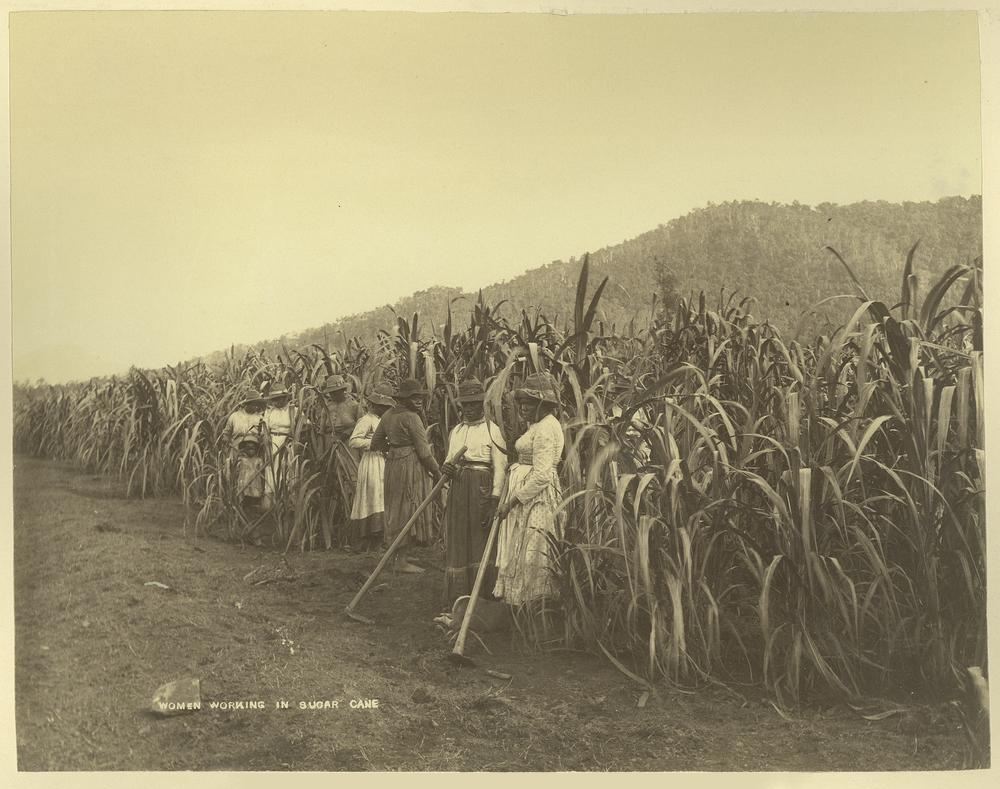
Using fresh scholarly and creative approaches, this project aims to examine the hidden histories of the Western Pacific’s Anglo and German plantations. We will examine indenture, blackbirding (kidnapping) and forms of unfreedom, with a focus on gender and mixed-race relationships. Linking archives in English and German, and foregrounding Pacific voices, especially of women, we will generate new knowledge of plantation lives, the labour trade and its legacies. Working with museums and Pacific artists we will also meet urgent demands for public redress and commemoration. We seek to bring the Pacific into conversation with global debates on unfreedom and slavery and advancing political change across Australia and the Western Pacific.
Aims
- To mobilise new cultural, material and creative approaches to examine the hidden histories and legacies of Anglo and German plantations of the Western Pacific in Queensland, Fiji, Papua New Guinea, and Sāmoa.
- To foreground Pacific voices, especially of women, and draw together new archives with testimony, material culture, and art
- To bring the Pacific into conversation with larger transnational and new imperial histories of slavery and unfreedom.
- To generate new knowledge by identifying hitherto unseen non-Anglo archives, resulting in alternate, enriched stories of plantation lives across the Western Pacific.
- In collaboration with Pacific artists and curators, we will pioneer original forms of creative practice as research, which reflect on and redress the harm of the 19th-century labour trade.
Key Research Questions
The following research questions will guide our thematic clusters and work plan. Some questions will be addressed more prominently at different stages, but all questions are of equal importance to the project as a whole:
- How do we locate the Western Pacific (Queensland, Fiji, Papua New Guinea, and Sāmoa) within comparative Anglo and German empires and global debates around unfreedom, slavery, dependency, and their legacies?
- What methods and frames of analysis are required to ‘hear’ the voices of ASSI, Pacific, and Indian Girmitiyas, especially women?
- How did the cultural, gendered and biopolitical spaces of Western Pacific plantations lead to cosmopolitan, mixed and creole societies; and how do these shape polities and public history today?
- What new stories of plantations, unfreedom, and intercolonial flows in the Western Pacific might be revealed by reading unstudied and newly digitised German and Anglo archives alongside Indigenous testimony and materials culture in archives and museum collections?
- By testing new modes of collaborative creative practice, how might artists and activists work with us to speak back to the archive, reimagining freedom, slavery, resistance, and redress to shift public awareness today?
Project Team
- Penny Edmonds, Lead Chief Investigator (CI), Flinders University
- Deidre Coleman, Chief Investigator, Melbourne University
- Imelda Miller, Partner Investigator, Queensland Museum
- Dr. Margaret Mishra, Chief Investigator, University of the South Pacific
- Jasmine Togo-Brisby, Artist in Residence
Pia Wiegmink, BCDSS, Partner Investigator, University of Bonn, Germany - Oliver Lueb, Rautenstrauch-Joest Museum, Partner Investigator, Cologne, Germany
- Kirsten McGavin, Post Doctoral Fellow, Flinders University
project partners